

No two aerospace components have identical cleaning requirements. A fuel nozzle, hydraulic manifold, landing gear component, turbine blade, structural part or actuator housing each presents a unique combination of material, geometry, contamination and cleanliness specification.
For this reason, selecting an industrial parts cleaning process is an engineering decision not simply a machine selection exercise. The process must be application-specific to deliver reliable technical cleanliness and support downstream manufacturing and operational performance.
Ecoclean India works as a process engineering partner. We help aerospace manufacturers develop, validate and optimise cleaning processes based on the actual characteristics of their components.
1. Understand the Component
Every effective cleaning process begins with a clear understanding of the component itself.
Key factors include:
- Material
- Geometry
- Surface finish
- Presence of blind holes
- Internal passages
- Heat-treated surfaces
- Coated surfaces
Aerospace components are manufactured from a wide range of materials, each with different cleaning sensitivities:
- Titanium alloys
- Aluminium alloys
- Grey cast iron
- Sintered metals
- Die-cast metals
- Plastics
- Stainless steel
- Composite materials
Material compatibility influences the choice of cleaning medium, temperature and mechanical action. Complex geometries with internal channels or tight tolerances often require immersion and ultrasonic assistance rather than simple spray cleaning.
2. Identify the Contamination
Different manufacturing operations generate different contaminants.
Common examples in aerospace production include:
- Cutting oils
- Coolants
- Grease
- Metallic chips
- Grinding residues
- Carbon deposits
- Polishing compounds
- Corrosion inhibitors
- Fingerprints
The contamination profile determines the most suitable cleaning technology and chemistry. Particulate contamination requires effective particle removal and filtration, while filmic contamination (oils and residues) often responds better to solvent-based or carefully formulated aqueous processes.
3. Define the Required Cleanliness Level
Cleaning objectives are defined by:
- Customer specifications
- Internal quality standards
- Aerospace OEM requirements
- Application-specific cleanliness limits
Inspection and evaluation methods commonly include:
- ISO 16232 / VDA 19 methodologies
- Industry-specific standards
- Particle analysis
- Millipore testing
It is important to note that ISO 16232 and VDA 19 provide standardised methods for extracting and evaluating contamination. The actual cleanliness limits (particle size distribution, maximum particle count, filmic residue levels, etc.) are typically defined by the customer or the specific application.
Clear definition of the target cleanliness level is essential before technology selection begins.
4. Select the Appropriate Cleaning Technology
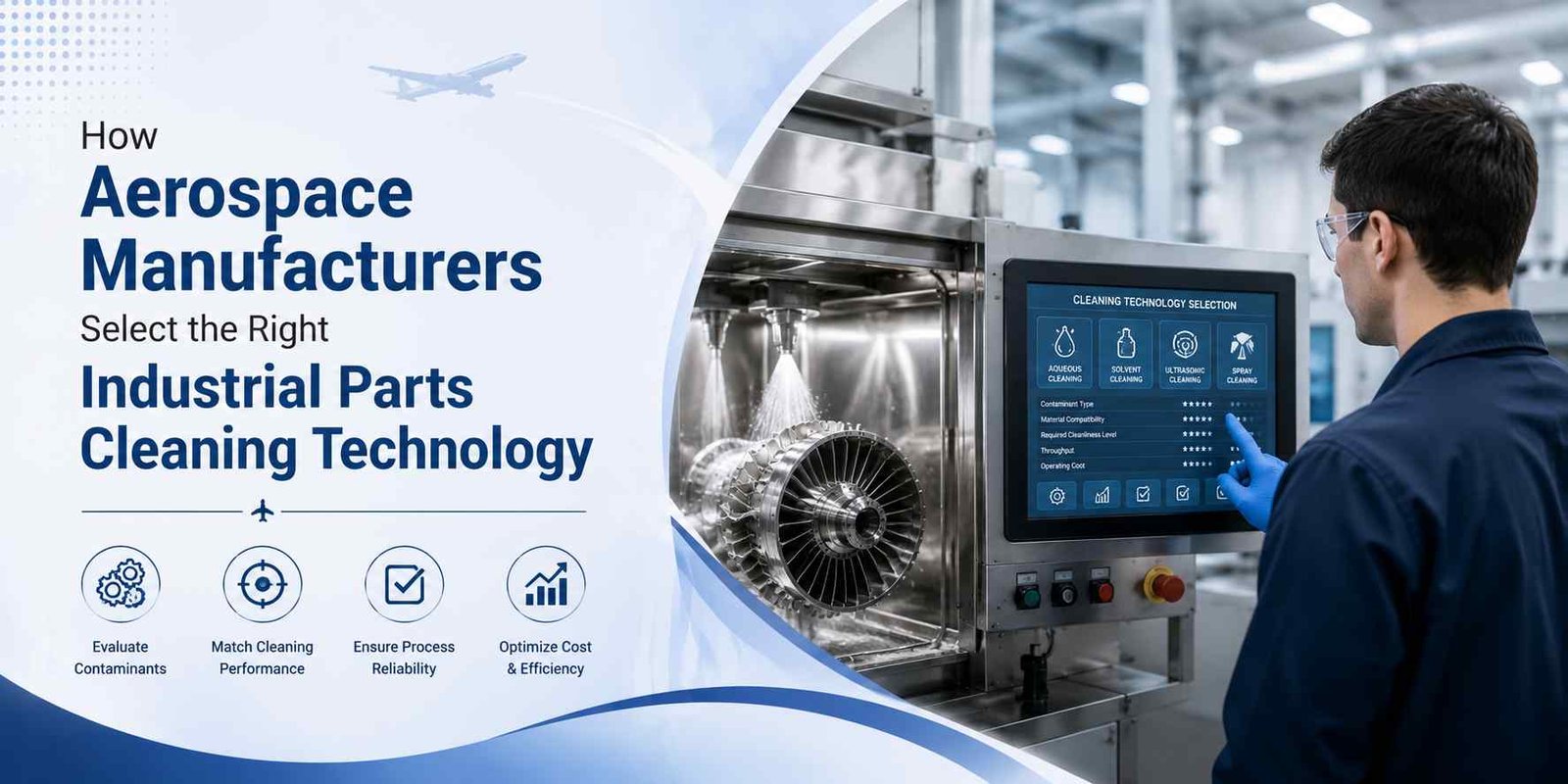
Technology selection depends on the combination of contamination type, material, geometry, cleanliness requirement and production throughput.
Suitable for coolant emulsions and particulate contamination when water-based processes meet the required cleanliness and environmental objectives.
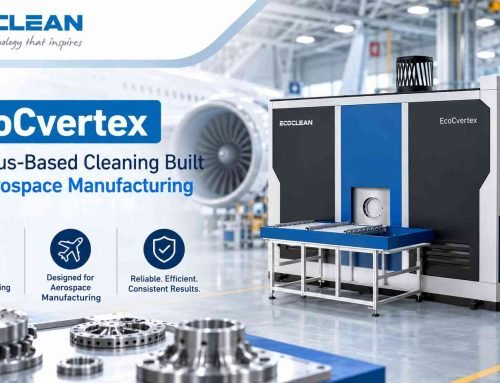
Ecoclean’s EcoCvertex offers advanced aqueous cleaning with optimised fluid management for fine and intermediate cleanliness levels.
Solvent Cleaning
Effective for mineral oils, preservation oils, and applications that demand residue-free drying.
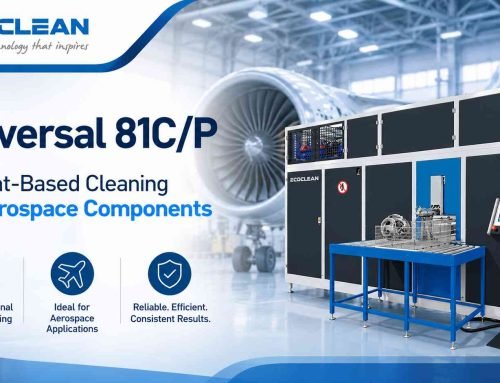
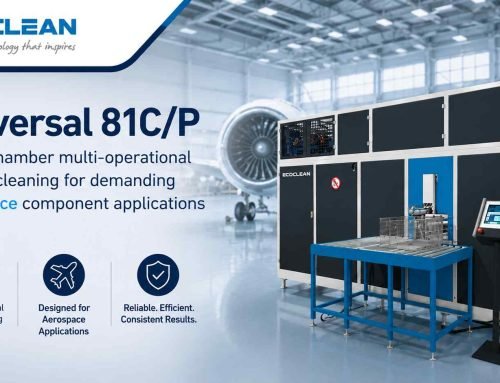
Recommended Ecoclean systems include the Universal 81C and compact Minio 85C.
Ultrasonic Precision Cleaning
Ideal for intricate geometries, blind holes, and high-precision components where conventional spray or immersion alone is insufficient.
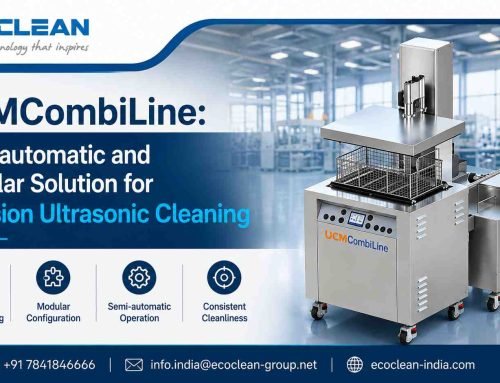
The UCMCombiLine modular ultrasonic system provides flexible, high-performance precision cleaning suited to aerospace requirements.
In many cases, multi-stage processes that combine immersion, ultrasonics, spray and controlled drying deliver the most consistent results.
5. Validate Before Production
This stage is Ecoclean’s strongest differentiator.
Before any cleaning system is implemented in production, the process must be proven. At the Ecoclean India Technology Centre in Pune.
We support aerospace manufacturers through:
- Cleaning trials on actual components
- Process optimisation
- Millipore testing
- Detailed particle analysis
- Full process validation against target specifications
Validation ensures the selected technology and process parameters consistently achieve the required technical cleanliness under real production conditions.
Conclusion
Selecting the right industrial parts cleaning technology for aerospace components is an engineering process. It requires systematic evaluation of the component, contamination profile, cleanliness targets and production objectives.
By following this structured approach and validating the process through trials and measurement, manufacturers can achieve reliable cleanliness, protect component performance and reduce the risk of downstream issues.
Need support in selecting and validating the right cleaning process for your aerospace components?
Contact the Ecoclean India Application Team to discuss your requirements and schedule a trial at the Pune Technology Centre.