

Table of Contents
- Summary
- Introduction
- What Is Aqueous Cleaning?
- What Is Solvent-Based Cleaning?
- Key Differences: Aqueous vs Solvent Cleaning
- When to Choose Aqueous Cleaning
- When to Choose Solvent-Based Cleaning
- Ecoclean India’s Aqueous Cleaning Machines Made in India
- Ecoclean India’s Solvent Cleaning Machines Made in India
- Not Sure Which One to Choose? Try Before You Buy
- Quick Comparison Table
- Why Choose Ecoclean India?
- Frequently Asked Questions (FAQs)
- Final Thoughts
Summary
One of the most common questions manufacturing engineers ask is: Should I go with aqueous cleaning or solvent-based cleaning for my components? The answer is not one-size-fits-all. Selecting between aqueous and solvent-based cleaning is not simply a machine selection decision; it is a process engineering decision. The appropriate cleaning technology depends on several factors, including contamination type, component geometry, material compatibility, required cleanliness level, production volume, and downstream manufacturing processes.
Both aqueous and solvent-based cleaning technologies play an important role in modern industrial manufacturing. Rather than asking which technology is better, manufacturers should determine which process is best suited to their specific application.
This blog explains the differences between both cleaning technologies, their typical applications, and the key engineering considerations involved in selecting the most appropriate industrial parts cleaning solution.
Introduction
Every machine part carries some form of contamination after production. It could be cutting oil from a CNC machine, coolant emulsion from grinding, metal chips from turning, grease from assembly, or a combination of all these. Before any part moves to the next stage, coating, assembly, quality inspection or packaging, it needs to be clean.
Now, the big question most plant managers and production engineers face is: which cleaning method actually works for my parts?
There are two main technologies in industrial parts cleaning: Aqueous (water-based) cleaning and solvent-based cleaning. Both are effective. Both have their strengths. And both are available as Made in India machines from Ecoclean India.
Selecting the appropriate cleaning technology is therefore an important engineering decision that directly influences manufacturing quality, process reliability, and operational efficiency.
Let us walk you through both technologies clearly so you can make the right decision for your plant.
What Is Aqueous Cleaning?
Aqueous cleaning, as the name suggests, uses water as the base cleaning medium. The water is mixed with specially formulated cleaning agents alkaline, neutral or acidic, depending on the type of contamination that needs to be removed.
The cleaning action happens through a combination of chemical action (the cleaning agent breaking down contamination), mechanical action (spray pressure, immersion or ultrasonic agitation) and thermal action (heated cleaning solution).
Aqueous systems typically work through multiple process stages: washing, rinsing and drying. Some advanced aqueous machines also include ultrasonic cleaning tanks for finer cleaning requirements.
How it works in simple terms: The cleaning agent in water attacks and loosens contamination on the part surface. The mechanical action whether it is spray jets, immersion, or ultrasonic waves, physically dislodges the contamination. The rinse stage removes all traces of the cleaning agent. The drying stage removes moisture from the part.
Common contamination types aqueous cleaning handles well:
- Water-soluble cutting fluids and coolants
- Alkaline-based metalworking fluids
- Emulsified oils
- Light machining oil
- Chips and solid particles
- Salts and water-soluble residues
What Is Solvent-Based Cleaning?
Solvent-based cleaning uses organic solvents, typically hydrocarbons or modified alcohols, instead of water. These solvents have a natural ability to dissolve oil and grease at a molecular level, which makes them extremely effective for contamination that water-based systems struggle to remove completely.
Modern solvent-based industrial cleaning machines are single-chamber systems. They run a multi-stage process inside one chamber: cleaning, rinsing, steam degreasing and vacuum drying all in one closed cycle. This closed-loop system also recovers and recycles the solvent, which means running costs are lower than you might expect, and environmental impact is minimised.
How it works in simple terms: The solvent dissolves the oil or grease contamination from the part surface. The steam degreasing stage uses solvent vapour to clean blind holes, narrow channels, and complex internal geometries that sprays cannot easily reach. Vacuum drying then removes all solvent traces, leaving the part completely dry and clean.
Common contamination types solvent cleaning handles well:
- Mineral oil-based lubricants and cutting oils
- Heavy grease and wax
- Lapping and grinding pastes
- Preservation oils
- Contamination in blind holes and complex internal passages
Key Differences: Aqueous vs Solvent Cleaning
Understanding the core differences between both technologies helps you pick the right one without guessing.
| Factor | Aqueous Cleaning | Solvent-Based Cleaning |
| Cleaning Medium | Water + cleaning agent | Hydrocarbon or modified alcohol solvent |
| Best For | Water-soluble contamination, emulsions, light oils | Mineral oils, heavy grease, complex geometry parts |
| Part Geometry | Open surfaces, spray-accessible areas | Blind holes, narrow channels, complex internal passages |
| Drying | Requires hot air or vacuum drying | Vacuum drying fast and complete |
| Environmental Impact | Low water-based, no solvent emissions | Low with modern closed-loop systems |
| Made in India Options | Universal 81W, EcoCmini, EcoCtwin, EcoCvertex | Universal 81C, Minio 85C |
When to Choose Aqueous Cleaning
Aqueous cleaning is the right choice for your plant when:
- You are dealing with water-soluble contamination: If your parts come out of a machining process with coolant, emulsion, or water-soluble cutting fluid on them, an aqueous cleaning system will remove this contamination effectively and economically.
- You have high production volumes: Aqueous machines handle large batch quantities well. If you are cleaning hundreds or thousands of parts per shift, aqueous technology offers faster throughput and lower per-part cleaning costs.
- Your parts have relatively open, accessible surfaces: If your components do not have deep blind holes or extremely narrow internal passages, aqueous spray cleaning will reach all critical surfaces without issues.
- You need an environmentally friendly, low-cost running solution: Water is inexpensive. Aqueous cleaning agents are easier to manage compared to solvents. For plants with large volumes and standard contamination, aqueous systems offer the lowest total cost of ownership.
- Your cleanliness target is standard to intermediate: For parts going into general assembly, painting or coating processes, where the cleanliness target is moderate aqueous cleaning meets the requirement comfortably.
When to Choose Solvent-Based Cleaning
Solvent-based cleaning is the right choice when:
- Your contamination is mineral oil-based: If your parts are coated with mineral oil lubricants, preservation oils, or heavy grease, water alone cannot dissolve these. Solvent cleaning breaks them down completely and reliably.
- Your parts have complex geometries: Blind holes, cross-drillings, narrow bores, internal threads, and cavities are difficult for water spray to reach. Solvent vapour degreasing penetrates every surface inside the part, ensuring complete cleaning even in the most inaccessible areas.
- You need fine or precision cleaning: For parts going into hydraulic valves, fuel injection systems, aerospace components, or precision assemblies where residual contamination is measured in micrograms solvent cleaning delivers the level of cleanliness that aqueous systems often cannot match without significant additional equipment.
- You need fast, complete drying: Solvent-cleaned parts come out bone dry after vacuum drying. There is no risk of rust, water spots, or moisture-related issues a concern that aqueous systems always carry for ferrous metal parts.
- You have limited floor space: Modern solvent cleaning machines like the Minio 85C are extremely compact. They pack a complete cleaning process wash, rinse, steam degrease, vacuum dry into a small footprint that fits easily into most production floor layouts.
Ecoclean India’s Aqueous Cleaning Machines Made in India
Ecoclean India manufactures a complete range of aqueous cleaning machines in Pune, designed specifically for the Indian manufacturing environment.
Universal 81W The Universal Aqueous Solution
The Universal 81W is one of the most widely used aqueous cleaning machines in Indian manufacturing plants. It is a versatile, multi-stage system that handles spray cleaning, immersion cleaning, and drying in a single machine. It works well for automotive components, machined parts, and general engineering applications where oil, emulsion, and chip removal are the primary requirements.
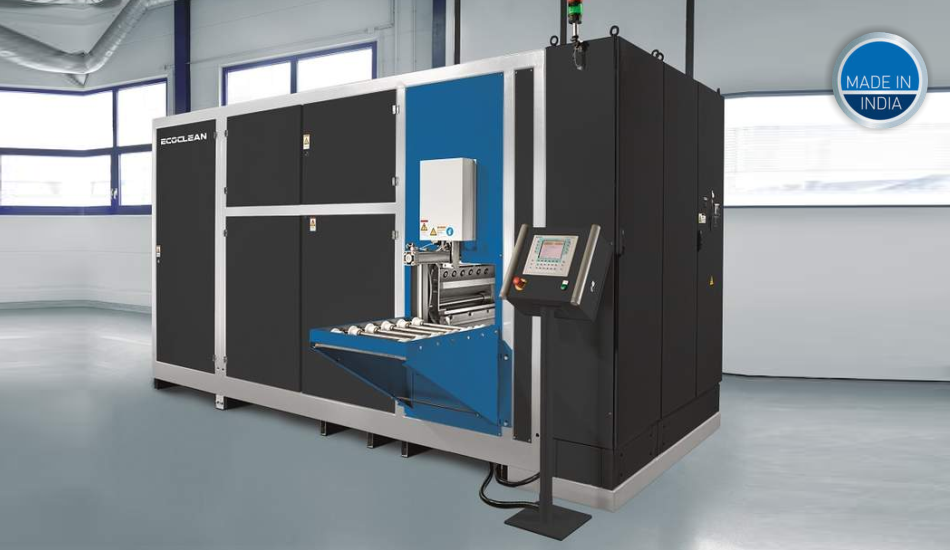
Universal 81W
EcoCmini The Compact Aqueous Solution (Made in India)
The EcoCmini carries the Made in India tag and is designed for manufacturers who need a reliable, compact aqueous cleaning machine without a large capital investment. It handles oil removal, emulsion cleaning and fine part washing in a smaller footprint. It is an ideal starting point for small to medium-sized manufacturing plants looking to upgrade their cleaning process.
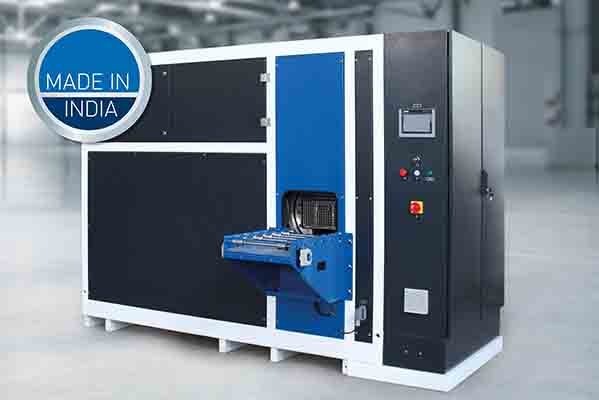
EcoCmini Made in India
EcoCtwin The Twin Chamber Cleaning Machine (Made in India)
The EcoCtwin is a twin-chamber aqueous cleaning machine with ultrasonic capability. It is built for plants that need both high cleaning performance and short cycle times. The twin-chamber design allows cleaning and rinsing to run simultaneously, improving throughput. Its ultrasonic function makes it suitable for fine cleaning requirements where spray alone is not enough.
EcoCvertex Cutting Edge Aqueous Cleaning System (Made in India)
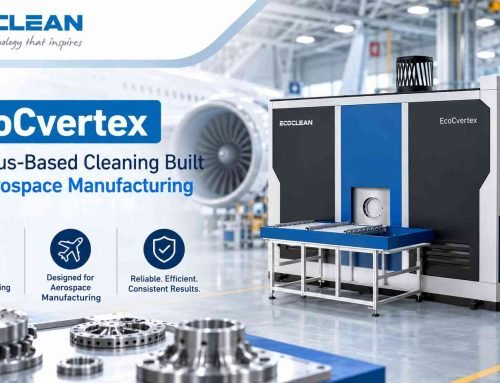
The EcoCvertex is Ecoclean India’s newest and most advanced aqueous cleaning machine. It features an innovative upright cylindrical third tank design that optimises fluid management and cleaning performance. It is built for manufacturers who need fine cleaning results with aqueous technology particularly for parts destined for precision assembly or quality-critical applications.
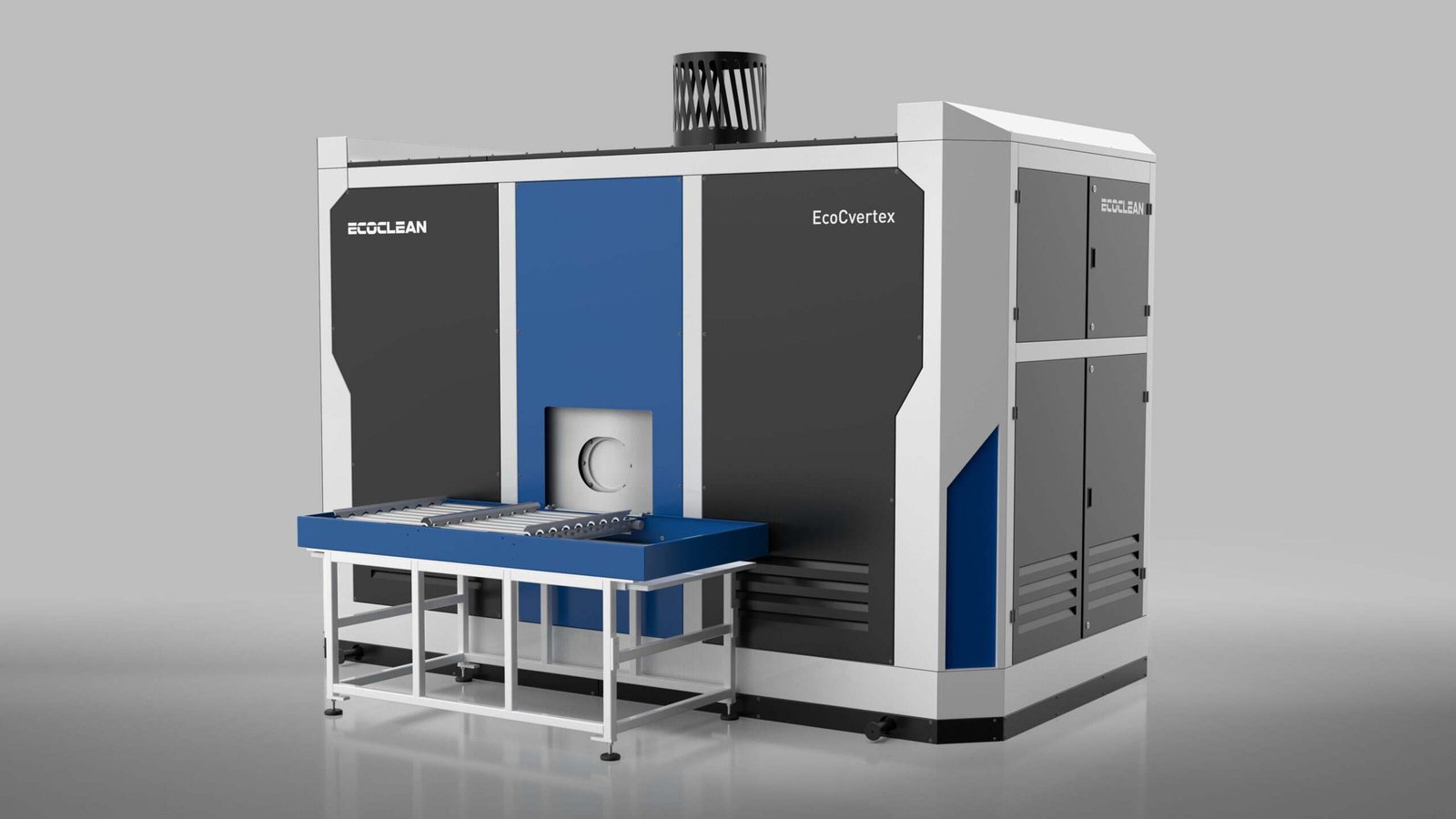
EcoCvertex Machine
Ecoclean India’s Solvent Cleaning Machines Made in India
Universal 81C The Universal Solvent-Based Solution (Made in India)
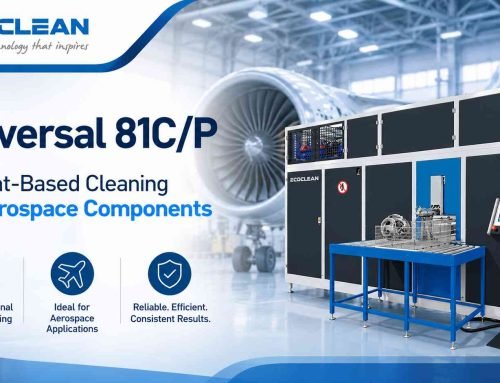
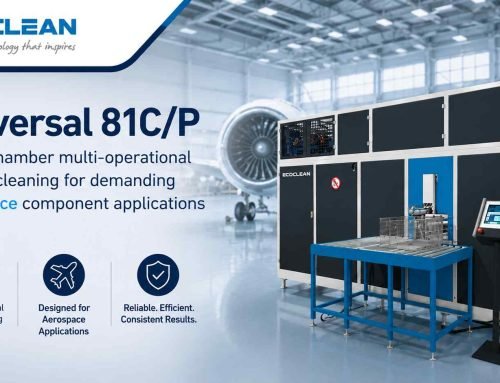
The Universal 81C is a proven solvent-based cleaning machine manufactured in India by Ecoclean India. It uses hydrocarbon solvents and runs a complete cleaning cycle wash, rinse, steam degrease, vacuum dry in a single closed chamber. It is well suited for precision components, hydraulic parts, fuel system components and any application where mineral oil removal and fine cleaning are required.
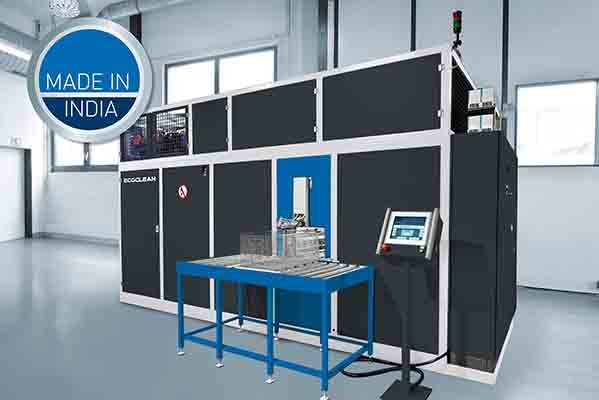 Universal 81C Made in India
Minio 85C The Solvent Washer for Minimal Space (Made in India)
The Minio 85C is a compact solvent degreaser that packs a full cleaning process into a very small machine footprint. It is perfect for plants with limited floor space or for decentralised cleaning stations within a larger production line. Despite its compact size, it delivers full solvent cleaning performance cleaning, vapour degreasing, and vacuum drying making it a highly cost-effective solution for small and medium manufacturers.
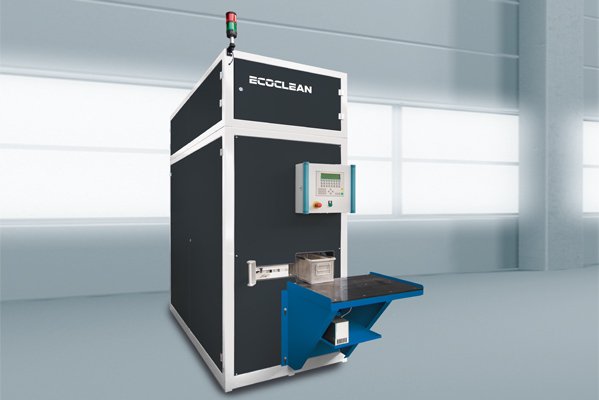 Minio 85C
Not Sure Which One to Choose? Try Before You Buy
One of the biggest advantages of working with Ecoclean India is that you do not have to guess which technology is right for your parts. At the Ecoclean India Technology Centre in Pune, you can bring your actual components and run real cleaning trials on different machines with different cleaning media aqueous, hydrocarbon, and polar solvent.
Before implementing any cleaning system, manufacturers should validate that the selected process consistently achieves the required cleanliness level under actual production conditions.
Process validation may include:
- Cleaning trials simulating production conditions
- Residual contamination analysis
- Particle analysis / Gravimetric evaluation
Where technical cleanliness is specified, inspection and validation may be carried out using recognised methodologies such as ISO 16232 and VDA 19, as applicable to the customer’s requirements.
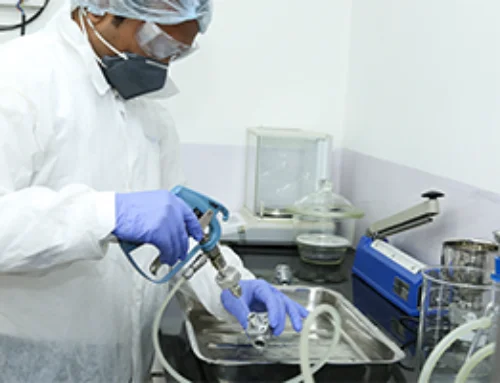
Ecoclean India Technology Centre Lab
Why Choose Ecoclean India?
Ecoclean India is a subsidiary of the SBS Ecoclean Group, formerly known as Dürr Ecoclean a globally recognised name in industrial cleaning technology. With a manufacturing facility in Pune and a pan-India sales and service network, Ecoclean India is the most complete industrial cleaning solution provider available in the Indian market today.
Here is what sets Ecoclean India apart:
- Made in India machines Comprehensive portfolio of aqueous, solvent-based, and ultrasonic cleaning technologies.
- In-house Technology Centre in Pune for cleaning trials, Millipore testing and particle analysis.
- Application-specific cleaning trials.
- Process validation and cleanliness analysis.
- Technical expertise across automotive, aerospace & defence, semiconductor manufacturing, medical technology, precision engineering and other high-technology industries.
- Pan-India service network quick response time for maintenance and spare parts.
Frequently Asked Questions (FAQs)
Q1. Can the same machine handle both aqueous and solvent cleaning?
A. No. Aqueous and solvent cleaning systems are built differently and use incompatible cleaning media. They are separate machine categories. However, some manufacturers use both types of machines in different stages of their production line, depending on the part and contamination type.
Q2. Is solvent cleaning harmful to the environment?
A. Modern solvent cleaning machines like the Universal 81C and Minio 85C from Ecoclean India use a fully closed-loop system. The solvent is continuously recovered, distilled and reused inside the machine. This means there are virtually no solvent emissions to the environment, making modern solvent systems much safer and cleaner than older open-tank degreasing methods.
Q3. Can aqueous cleaning meet ISO 16232 or VDA 19 cleanliness standards?
A. Yes, absolutely. Aqueous cleaning machines from Ecoclean India, particularly the EcoCvertex and EcoCtwin, are fully capable of achieving the fine cleanliness levels required by ISO 16232 and VDA 19 standards when properly configured for the specific part and contamination.
Q4. Which cleaning technology is better for automotive parts?
A. It depends on the specific automotive component. For engine blocks, cylinder heads, and transmission housings where coolant and chips are the primary contamination, aqueous cleaning works very well. For fuel injection components, hydraulic valves and precision-machined parts with mineral oil contamination and complex internal geometry, solvent cleaning delivers better results.
Q5. How do I know for sure which technology is right for my parts?
A. The most reliable way is to run a cleaning trial at the Ecoclean India Technology Centre in Pune. You bring your actual parts, the team runs trials on different machines and the results, including Millipore test data and particle analysis, tell you exactly which technology meets your cleanliness requirement. Contact Ecoclean India at info.india@ecoclean-group.net to schedule a trial.
Final Thoughts
Aqueous and solvent cleaning are both proven, reliable technologies. Neither is universally better than the other the right choice always depends on your specific part, your contamination type and your cleanliness requirement.
If your contamination is water-soluble and your volumes are high, go aqueous. If your parts have complex geometry, mineral oil contamination or fine precision cleaning needs, go with solvent.
At Ecoclean India, we manufacture both categories of machines right here in India, and our team has the technical expertise to help you find the right solution without overcomplicating the decision.
Ready to find out which cleaning system fits your production process? Contact us today and book a cleaning trial at our Pune Technology Centre.
📞 Sales Hotline: +91 (0) 9028261666
📧 Email: info.india@ecoclean-group.net
🌐 Website: www.ecoclean-india.com
📍 Address: Plot T-42, T Block, MIDC Bhosari, Pune – 411026.