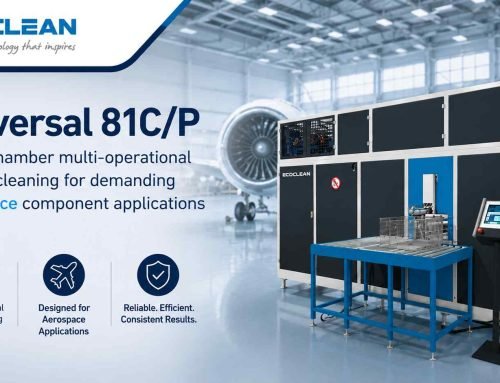


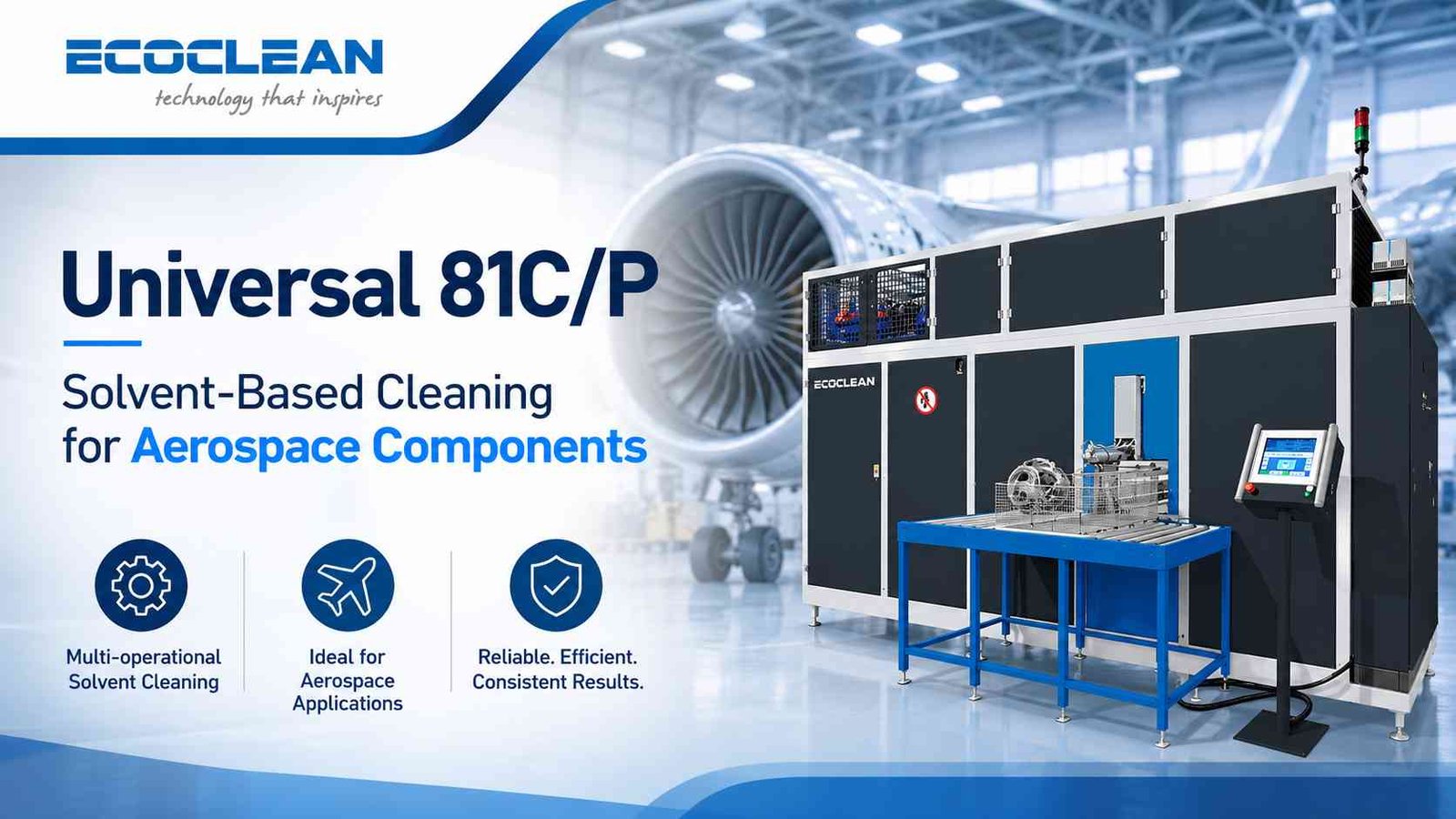
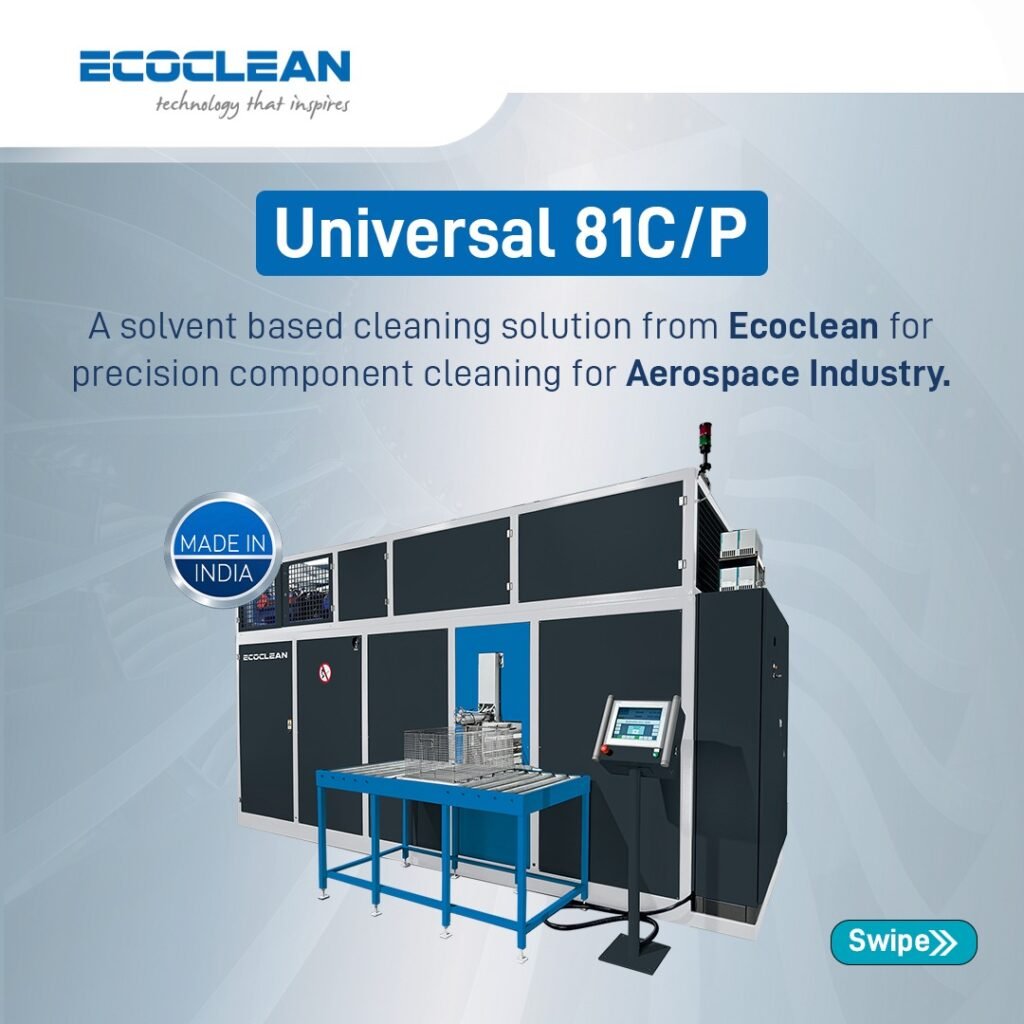
Universal 81C/P – a solvent-based cleaning solution from Ecoclean for precision component cleaning in the Aerospace Industry.
Aerospace components can retain machining oils, cutting-fluid residues, greases, emulsions and particulate contamination in machined recesses, bores and other difficult-to-access areas. Removing this contamination consistently requires a cleaning process designed around the component geometry, contamination type and required cleanliness level.
The Universal 81C/P is a solvent-based, Made-in-India cleaning system from Ecoclean that combines multiple cleaning and drying processes within a closed work chamber. Its process configuration can be adapted to the specific requirements of the component and the contamination to be removed.
The Challenge of Treating Aerospace Cleaning as a Single Step
A single cleaning method may not address all the contamination and geometry challenges presented by an aerospace component. Depending on the application, effective cleaning may require a combination of immersion, spraying, injection flood washing, vapour degreasing and controlled drying.
The Universal 81C/P is therefore designed around a multi-operational process sequence, rather than relying on one cleaning mechanism. This allows different process stages to address different cleaning requirements within the same closed work chamber.
Process Technologies Integrated in the Universal 81C/P
The Universal 81C/P is a solvent-based, made-in-India machine engineered specifically for aerospace component cleaning. It combines several cleaning and drying processes that can be configured according to the application:
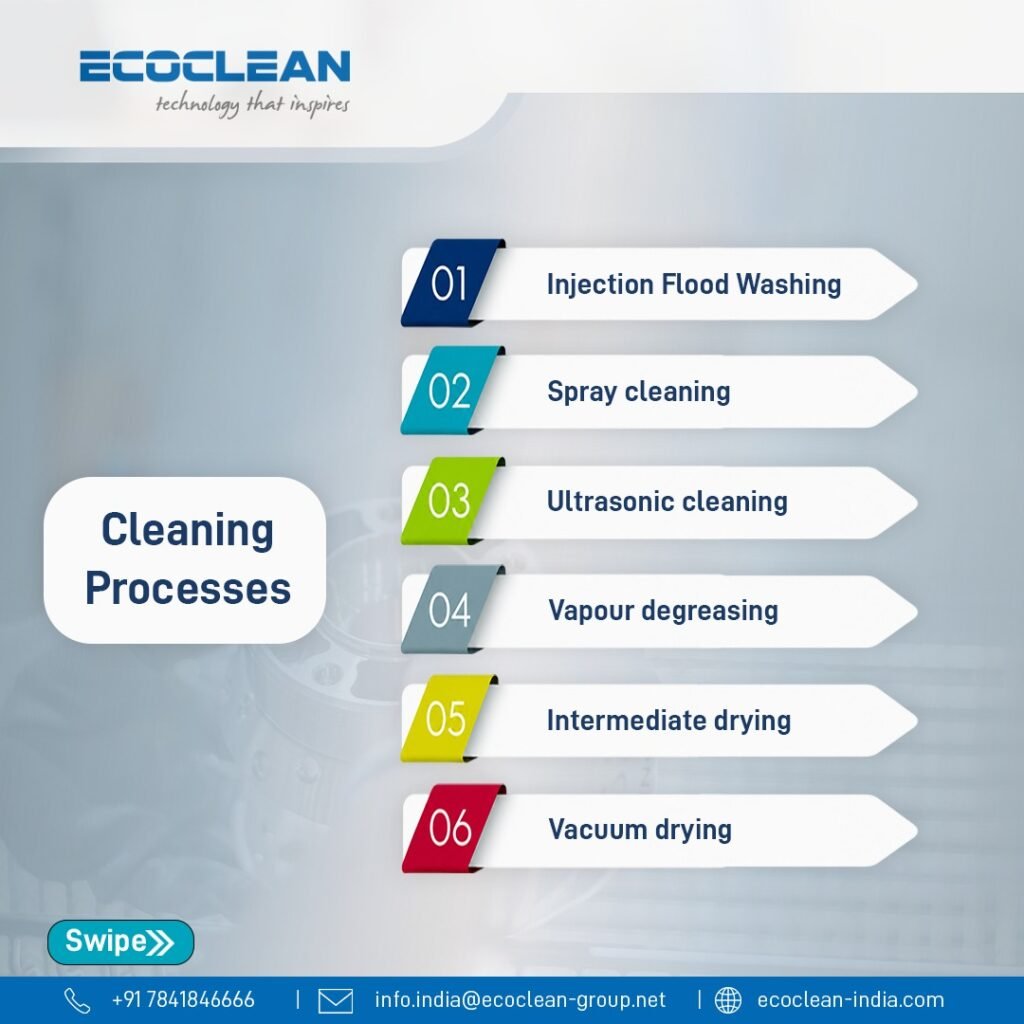
- Injection flood washing: drives cleaning fluid directly into channels, bores and recessed features that a surface spray simply can’t reach.
- Spray cleaning: handles broader surface contamination efficiently before finer processes take over.
- Ultrasonic cleaning: Available as an option for applications requiring additional cleaning action. It uses cavitation to dislodge sub-micron particulate from complex geometries, the same principle we cover in more depth on our ultrasonic cleaning technology page.
- Vapour degreasing: Supports the removal of residual oil and filmic contamination.
- Intermediate drying: removes surface moisture between stages so later processes aren’t working against a wet part.
- Vacuum drying: finishes the cycle with a 100%dry component, including inside blind holes.
Running a part through this full chain, rather than a single pass, is what makes the difference between a component that looks clean and one that actually meets a documented cleanliness specification.
Why the Numbers Matter as Much as the Process
A cleaning system only earns its place on an aerospace production line if it performs consistently, shift after shift, without becoming a maintenance burden or a cost center.
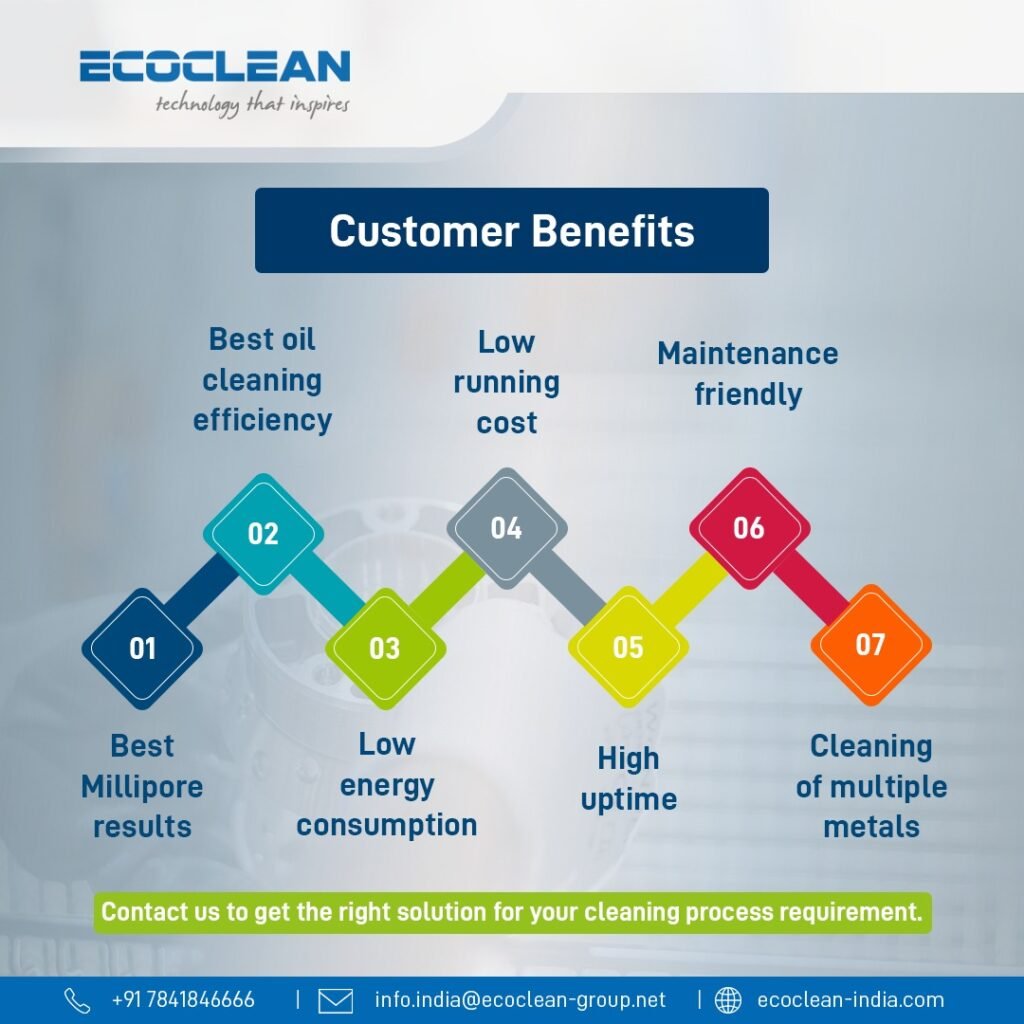
That’s where the Universal 81C/P’s operating profile does the real talking:
- Best Millipore results: the particle-count testing method most aerospace and precision manufacturers rely on to verify a part is genuinely within spec, not just visually clean.
- Best oil cleaning efficiency: built specifically around the tough oil and cutting-fluid residues common in machined aerospace hardware.
- Low energy consumption and low running cost: the process chain is engineered for efficiency, not just cleaning power, which matters once a machine is running full production shifts.
- High uptime: a machine that’s down for repairs isn’t cleaning anything and aerospace production schedules don’t leave much room for that.
- Maintenance-friendly: designed so routine upkeep doesn’t turn into a full production stoppage.
- Cleaning of multiple metals: one machine that handles titanium, aluminum, nickel-based alloys and other aerospace materials, instead of needing separate equipment per material type.
Where This Fits Into Your Process
If your current cleaning line is handling aerospace parts through a process that was originally designed for automotive or general industrial components, it’s worth asking whether it’s actually verified against aerospace-grade cleanliness requirements or just assumed to be good enough. The two aren’t the same thing and the aerospace sector doesn’t leave much room for assumptions.
Our Universal 81C product page has the full technical specifications and our aerospace applications page covers how we’ve approached cleaning across other component types in this sector. We also run cleaning trials at our Pune Technology Centre so you can see Millipore-verified results on your actual parts before committing to equipment.
Looking for the right cleaning solution for your aerospace components? Contact Ecoclean India for application-specific cleaning solutions.
📞 Call: +91-7841846666
📧 Email: info.india@ecoclean-group.net
🌐 Visit: ecoclean-india.com
Contact Us to Get the Right Cleaning Solution →
Frequently Asked Questions
- What makes the Universal 81C/P different from a standard solvent cleaning machine?
A. It doesn’t rely on a single cleaning method. It combines injection flood washing, spray cleaning, ultrasonic cleaning, vapour degreasing and vacuum drying in one process chain, so different contamination types and part geometries are handled by the stage best suited to them, rather than forcing everything through one generic wash cycle. - Is the Universal 81C/P suitable for materials other than aluminum?
A. Yes. It’s built to clean multiple metals, including titanium alloys, nickel-based superalloys and aluminum, which is important given how many different materials show up across a single aerospace production line. - How is cleanliness actually verified on parts run through this machine?
A. Through Millipore particle-count testing, the same method most aerospace manufacturers use to confirm a component meets a documented cleanliness specification rather than just appearing clean. We run this testing at our Pune Technology Centre before a customer commits to a configuration. - Does a multi-stage cleaning process like this increase running costs significantly?
A. Not in practice. The Universal 81C/P is engineered for low energy consumption and low running costs alongside high uptime, so the added process stages don’t translate into a heavier operating burden. - Can this machine handle both external surface contamination and hard-to-reach internal features?
A. Yes. Injection flood washing and ultrasonic cleaning are specifically included to reach internal channels, bores and recessed geometries that spray cleaning alone can miss, while vacuum drying ensures those same hard-to-reach areas end up dry, not just clean.
Ecoclean India is part of the SBS Ecoclean Group, manufacturing precision parts cleaning systems from our Pune facility since 2008, with in-house testing and validation against ISO 16232 and VDA 19 standards.