


Summary
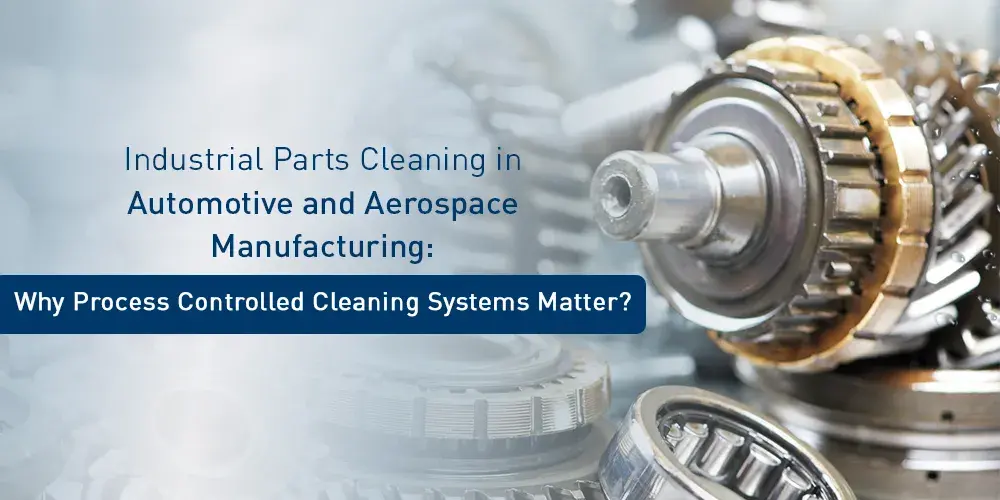
Industrial parts cleaning plays a critical role in modern automotive manufacturing. Components used in powertrain systems, fuel injection assemblies, turbine systems, transmissions, hydraulic components and other precision-machined parts must meet defined cleanliness requirements before moving to downstream processes such as assembly, coating or testing.
During machining and manufacturing operations, components accumulate cutting oils, metal chips, abrasive particles and environmental contaminants. If these residues remain on the component surface, they can affect assembly quality, functional performance and long-term reliability.
Process-controlled cleaning systems are therefore used to ensure stable and repeatable cleaning performance. These engineered machines maintain controlled parameters such as temperature, chemistry, time, mechanical action,these systems deliver consistent and repeatable cleaning results in high-volume production environments.
Introduction
Manufacturing of automotive and aerospace components involves multiple machining and surface processing operations including turning, milling, grinding and honing. During these processes, parts are exposed to cutting fluids, corrosion protection oils and fine metal particles generated during machining.
Industrial parts cleaning systems are designed to address this challenge by providing a controlled cleaning environment. Instead of relying on manual washing methods, manufacturers increasingly use automated cleaning machines that operate with defined process parameters to remove contamination from components before they enter the next production stage.
Typical Sources of Contamination in Automotive Components
During machining and handling processes, components may accumulate different types of contamination, including:
- Cutting oils and lubricants
- Coolants used during machining operations
- Metal chips and burrs
- Fine abrasive particles
- Environmental dust or handling debris
These contaminants must be removed under controlled conditions to ensure the component meets the cleanliness requirements specified by the manufacturer or customer.
Why Industrial Parts Cleaning Is Important in Automotive Manufacturing
Automotive components often operate under high-precision conditions. Even small particles or oil residues can interfere with mechanical performance or assembly quality.
Proper cleaning therefore, supports:
- Reliable component assembly
- Stable coating or surface finishing processes
- Reduced wear and improved durability
- Compliance with technical cleanliness requirements
For this reason, parts cleaning is integrated as a process step within the production line, rather than being treated as a secondary operation.
Some of the Components that Requires Controlled Cleaning
Many high-performance components require controlled cleaning before assembly or further processing.
Automotive Components
- fuel injection systems
- transmission components
- engine parts
- bearing assemblies
- precision-machined housings
Aerospace Components
- turbine blades and compressor components
- aircraft hydraulic system components
- fuel system components
- actuator and valve bodies
- landing gear components
These parts often contain complex geometries and tight tolerances, making controlled cleaning processes essential.
Role of Process-Controlled Cleaning Systems
Modern industrial parts cleaning systems operate under controlled and repeatable process conditions to ensure consistent contamination removal.
Key process parameters typically controlled within the cleaning system include:
- cleaning media circulation
- spray pressure and distribution
- filtration efficiency
- temperature control
- drying performance
By stabilizing these parameters, the cleaning process becomes reproducible and reliable across production batches.
Advanced cleaning systems developed by companies such as Ecoclean GmbH are widely used in automotive and aerospace manufacturing environments where high cleanliness levels are required.
Cleaning Technologies Used in Industrial Manufacturing
Industrial parts cleaning typically uses two primary technologies, depending on the type of contamination.
-
Aqueous Cleaning Systems
Aqueous cleaning systems use water-based cleaning media combined with detergents, multi-stage rinsing and filtration processes. These systems are commonly used for removing particulate contamination and water-soluble residues.
-
Solvent-Based Cleaning Systems
Solvent cleaning systems use hydrocarbon or modified alcohol solvents to dissolve oils and greases from component surfaces. These systems are particularly effective when contamination is dominated by oil-based machining fluids.
Both technologies are widely used in automotive and aerospace component manufacturing depending on process requirements.
Integrating Cleaning Systems into Production
In modern manufacturing environments, cleaning is integrated directly into the production workflow rather than being treated as a secondary operation.
Integrating industrial parts cleaning systems into the manufacturing process offers several benefits:
- consistent contamination removal
- reduced risk of assembly failures
- stable product quality across batches
- improved reliability of precision components
Process-controlled cleaning systems therefore play a key role in maintaining production quality in both automotive and aerospace industries.
Conclusion
While cleaning systems remove contamination from components, manufacturers must also verify whether the required cleanliness levels have been achieved.
In the next article, we explore how contamination levels are evaluated using technical cleanliness standards such as ISO 16232 and VDA 19, along with aerospace cleanliness specifications.
Frequently Asked Questions
Q1. Why is industrial parts cleaning important in automotive manufacturing?
A. Industrial parts cleaning removes oils, particles, and machining residues that can affect component performance and assembly quality.
Q2. What types of contamination are commonly found on automotive components?
A. Common contaminants include cutting oils, coolants, metal chips, abrasive particles, and environmental dust.
Q3. How do industrial cleaning machines improve cleaning consistency?
A. These machines operate under controlled parameters such as temperature, filtration, and media circulation, ensuring repeatable cleaning results.
Q4. What standards are used to evaluate technical cleanliness in automotive manufacturing?
A. Standards such as ISO 16232 and VDA 19 are widely used to evaluate particulate contamination and verify component cleanliness.