

Summary
Degreasing is a critical step in modern manufacturing, directly influencing component quality, downstream process reliability, and long-term product performance. Selecting the right degreasing machine is not simply a purchase decision; it is a process engineering choice that affects productivity, cleanliness consistency, and operational efficiency.
This pillar guide explains how factories in India should evaluate degreasing machine technologies, process requirements, scalability, and integration factors. It provides a practical buyer’s checklist to help manufacturers select a machine-driven degreasing solution that aligns with real production needs.
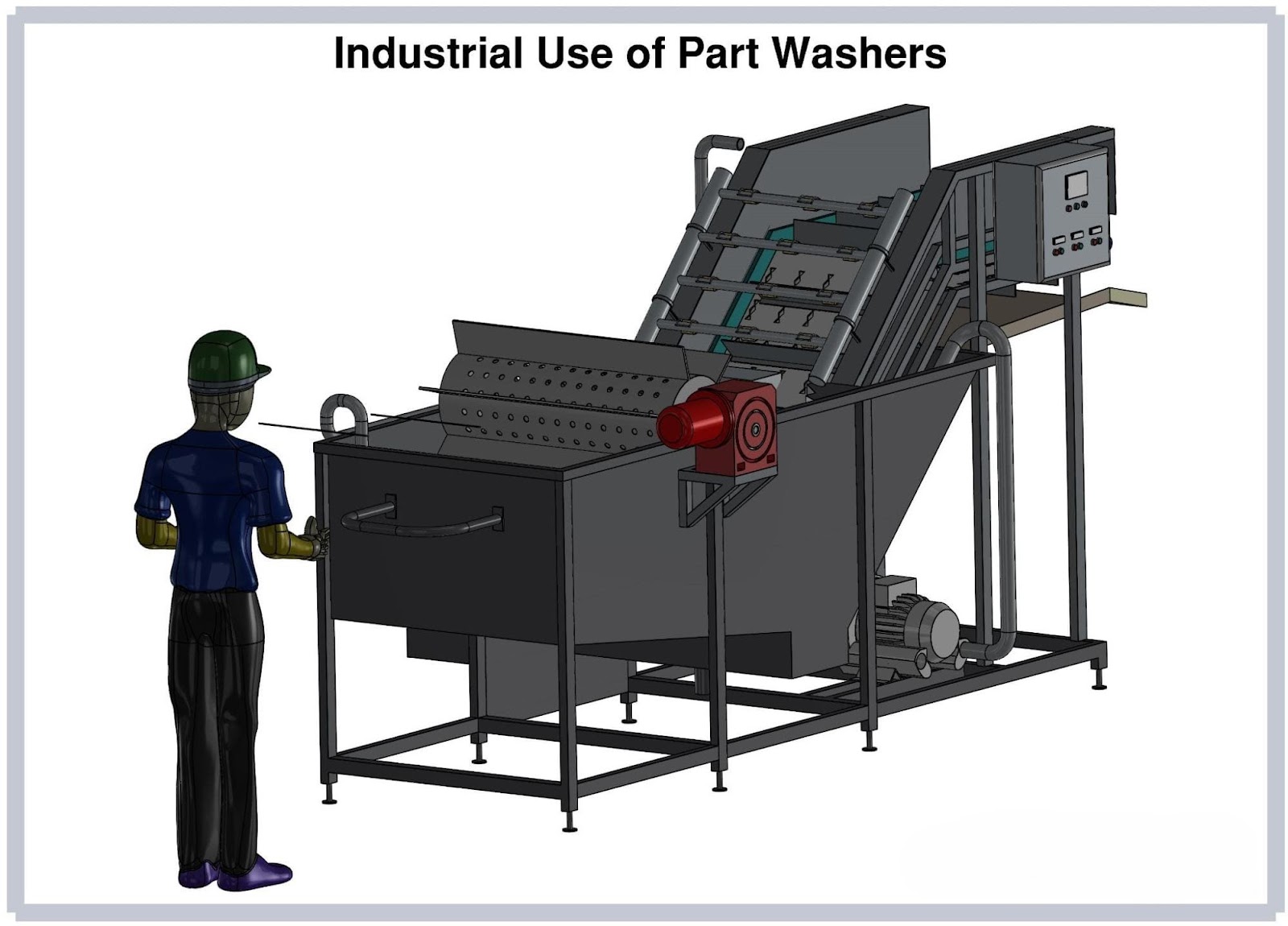
Table of Contents
- Introduction
- Why Degreasing Is a Process Requirement Not a Cleaning Task
- Understanding Degreasing Technologies
- Factory Evaluation Checklist Before Buying
- Machine Design Factors That Affect Performance
- Matching Degreasing Machines to Production Needs
- Comparison Table of Degreasing Approaches
- Integration and Scalability Considerations
- Conclusion
- Frequently Asked Questions
Introduction
Manufacturing environments across India are operating under tighter cleanliness expectations than ever before. Residual oils, machining fluids, and particulate contamination can compromise assembly, coating, and surface finishing processes.
A degreasing machine must therefore function as a controlled production system, delivering repeatable results not just visible cleanliness. Choosing the correct system requires understanding contamination profiles, throughput requirements, and process stability expectations.
Why Degreasing Is a Process Requirement Not a Cleaning Task
Degreasing directly impacts:
- Assembly precision
- Coating adhesion
- Surface integrity
- Product reliability
- Rejection and rework rates
Manual or inconsistent degreasing introduces variability. A properly engineered degreasing machine stabilizes:
- Mechanical cleaning energy
- Chemical concentration
- Temperature control
- Media circulation
- Drying performance
This transforms degreasing into a repeatable manufacturing process.
Understanding Degreasing Technologies
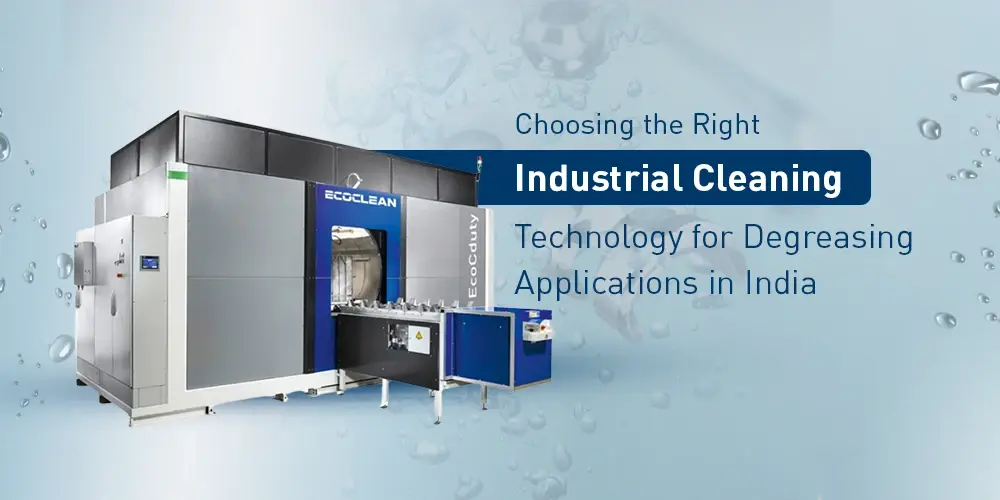
Different factories require machine solutions depending on contamination type, component geometry, and cleanliness targets. For industrial degreasing applications involving heavy oils, greases and machining residues, closed-loop solvent-based degreasing machines are generally the technically recommended solution.
Solvent Degreasing Machines
Modern solvent-based systems operate in sealed and controlled chambers designed to remove stubborn oils, embedded machining residues, and contamination from complex component geometries. These machines maintain stable process parameters, including temperature, solvent recovery, filtration, and vapor management.
Because solvent systems deliver residue-free cleaning with high process repeatability, they are widely adopted in automotive, aerospace, and precision manufacturing environments where defined cleanliness levels must be consistently achieved.
Factory Evaluation Checklist Before Buying
A degreasing machine should be selected through structured evaluation not catalog comparison.
Key checklist points:
- Component material and geometry
- Contamination type and load
- Required cleanliness standard
- Batch vs continuous production
- Cycle time expectations
- Automation compatibility
- Space availability
- Environmental compliance
- Maintenance accessibility
- Future scalability
This checklist ensures the machine aligns with real operational conditions.
Machine Design Factors That Affect Performance
Machine architecture determines cleaning effectiveness and long-term reliability.
Important design aspects include:
- Spray dynamics and fluid distribution
- Filtration efficiency
- Thermal management
- Chamber sealing integrity
- Media separation systems
- Drying capability
- Automation interface
A robust design supports consistent degreasing performance under continuous operation.
Matching Degreasing Machines to Production Needs
Factories vary in throughput, component diversity and cleanliness standards. Machine selection should consider:
- High-volume automotive production
- Precision machining environments
- Mixed-component manufacturing
- Medical and aerospace applications
Proper matching ensures the degreasing system functions as a production asset not a bottleneck.
Degreasing Technology Comparison
| Parameter | Solvent Degreasing Machines |
| Cleaning Capability | High removal of oils and residues |
| Precision Suitability | Excellent for complex components |
| Process Control | Fully enclosed and repeatable |
| Geometry Handling | Suitable for intricate features |
| Industrial Use | Automotive, aerospace, precision manufacturing |
Integration and Scalability Considerations
A degreasing machine should integrate smoothly into the production ecosystem.
Consider:
- Inline automation compatibility
- Loading/unloading ergonomics
- Process monitoring capability
- Modular expansion options
- Service accessibility
Future-ready systems reduce upgrade costs and support evolving production demands.
Conclusion
Choosing the right degreasing machine is a strategic manufacturing decision. A properly engineered system ensures repeatable cleanliness, stable downstream processing and operational efficiency.
Factories that treat degreasing as a machine-controlled production process gain measurable improvements in quality, productivity and long-term reliability.
Frequently Asked Questions
Q1. Why are solvent-based degreasing machines commonly recommended for industrial use?
A. Solvent-based machines provide high cleaning efficiency for oils, greases, and machining residues while maintaining controlled, repeatable process conditions, making them suitable for precision industrial applications.
Q2. Can degreasing machines be automated?
A. Yes, most modern systems support integration with automated production lines.
Q3. What affects degreasing consistency?
A. Machine control of temperature, solvent recovery, filtration, and cycle timing.